Original Classical Guitar Composition

“The Temptation of Paradise” – Classical Guitar
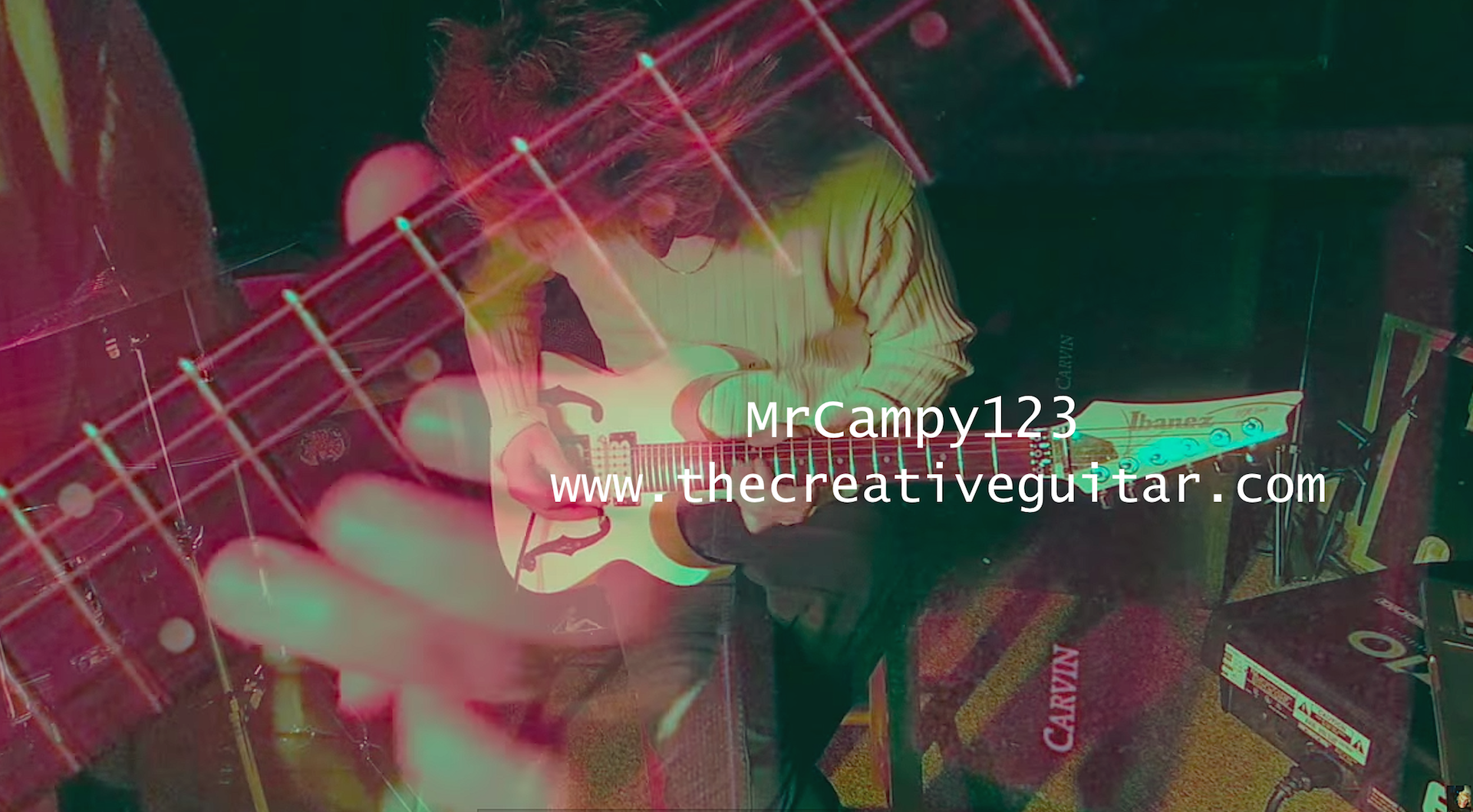
Written and performed by Mark Jeffery Campayno

Notes:

This work is by far my favorite in terms of it’s sound and it’s construction. I don’t remember consciously doing this but it has a logical rhythmic flow to it. The music starts out with a statement of the melody in between some very dense arpeggiated chords. I overdubbed harmonics during the work as a decorative effect. I hope you will forgive my preference such additions!

As the piece develops it gets much more dramatic and intense reachesing its peak at :45. Then at 1:06 it breaks away and the music takes a collective breath. As it begins its second climb back towards a peak in volume and dynamics I moved the sound to the middle of the spectrum for effect. Then at around 1:40 I go a little left of center to complete the cycle.

As the piece progresses I begin to use more slurring techniques to push the energy even more. These are slurring riffs that I’ve developed over the years. Many times they come out randomly and are basically done on the fly. Think of them as being “on call”.They are not easy and the slight string noise I like as it is idiomatic of acoustic guitar music.

The piece ends with the harmonics that appeared originally at the beginning. A typical writing technique that tends to tie the piece together.

Mark
.

Anatomy of Improvised Guitar “Inner Life”

How does one begin to explain the emotions contained within such a piece of music? It’s not possible with mere words. If it were there would be no music. To this day, this song weighs heavy on my heart. Basically, the music was birthed on a Sunday afternoon with my son. Looking back, that day was telling. In a way, the power of God was present that day and it now seems that a message was being sent to me. After dropping my son off (the most painful moments of my life) I drove the usual three hours back home. I had no intention of recording anything as it was late and I was tired. Looking around the room I saw my old Aria acoustic guitar. I picked it up and the music began to flow. It was as if a force outside of myself compelled me to do so. I played a few minutes and then decided to record a little of it. The result will always be one of my most memorable acoustic pieces. The pain, regret, longing, and yes, remorse are evident in the music. Do I hear any ray of hope in it? Well, I’m looking still…

The Teaching of Improvisation (Introduction)

Another blog post on the teaching of improvisation? Yes. When you consider that we all come from differing backgrounds, training, instruction, and preferences. Mix all of this together and you begin to see how complex it can get. Instructors come to the teaching of improvisation with a set of skills that have been honed through gigging, practice, and study. The study of scales, modes, and chords end up in our mental and physical tool kit and we call upon them when we improvise and when we teach students to do it themselves.

Without question, there have been, and still are, great improvisers in all genres who have had little or no formal training in music in any way but can improvise freely and masterfully. Remember that these musicians have the gift of “hearing” and can play what they hear on their instruments with ease.

For most the best wagply to learn or improve on improvisational skills is to do it every day. There is no substitute for good old-fashioned woodshedding. The amount of material available today is staggering. So, we should see a great resurgence in improvising and a rise in its popularity right?

Getting students to practice improvising is not easy as it throws them into the “unknown”. This is the land that few dare to travel to especially in the early stages of awkwardness on the guitar. Once self-assuredness and confidence build up, prsflameskill development in improvisation can blossom.

We will look at the unlimited amount of help that is available with the explosion of music software that is at everyone’s fingertips. Most importantly,  approaches must be taken to get students to actively “practice” improvisation on their own. Music, and the guitar need to be an active part of the student’s life at home and with his or her circle of friends and family.
In the upcoming posts I will call upon my teaching and playing experience to dissect a methodology that works as a global template of sorts. This template must, and should, be fluid and adaptable meeting the varied (sometimes severly) learning styles of each student you instruct.